
LGV study notes
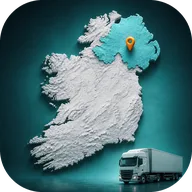
NI Exempt
Questions that are not used in Northern Ireland tests. The app keeps them out of the mock test so a mock is fair wherever you sit the test.
What this topic covers
Questions that are not used in Northern Ireland tests. The app keeps them out of the mock test so a mock is fair wherever you sit the test. The full LGV & HGV Theory Test & Toolkit app contains 21 questions on this topic.
In the app's syllabus: Questions that do not appear on the Northern Ireland theory test.
Worked examples
Here are a few practice questions from this topic. Try answering each before reading the explanation.
You’re driving a lorry with a maximum authorised mass of more than 7.5 tonnes. What’s the national speed limit for your vehicle on a dual carriageway in England and Wales?
- A. 40 mph
- B. 50 mph
- C. 60 mph ✓ correct
- D. 70 mph
Who must you tell when your vehicle collides with a bridge?
- A. The police ✓ correct
- B. The local authority
- C. Your local garage
- D. The fire service
Where can you get a replacement driver tachograph card?
- A. The Driver and Vehicle Licensing Agency ✓ correct
- B. The Driver and Vehicle Standards Agency
- C. Any MOT test centre
- D. A tachograph centre
The Driver and Vehicle Standards Agency (DVSA) and the police carry out spot checks for faulty vehicles. What will happen to the vehicle if serious defects are found?
- A. It will be impounded until a new driver is found
- B. It will be restricted to 30 mph for the remainder of the journey
- C. It will be prohibited from further use until the defects are rectified ✓ correct
- D. It will be ordered back to the depot to unload goods
More LGV study notes
Get all 21 questions on this topic in the LGV & HGV Theory Test & Toolkit app.