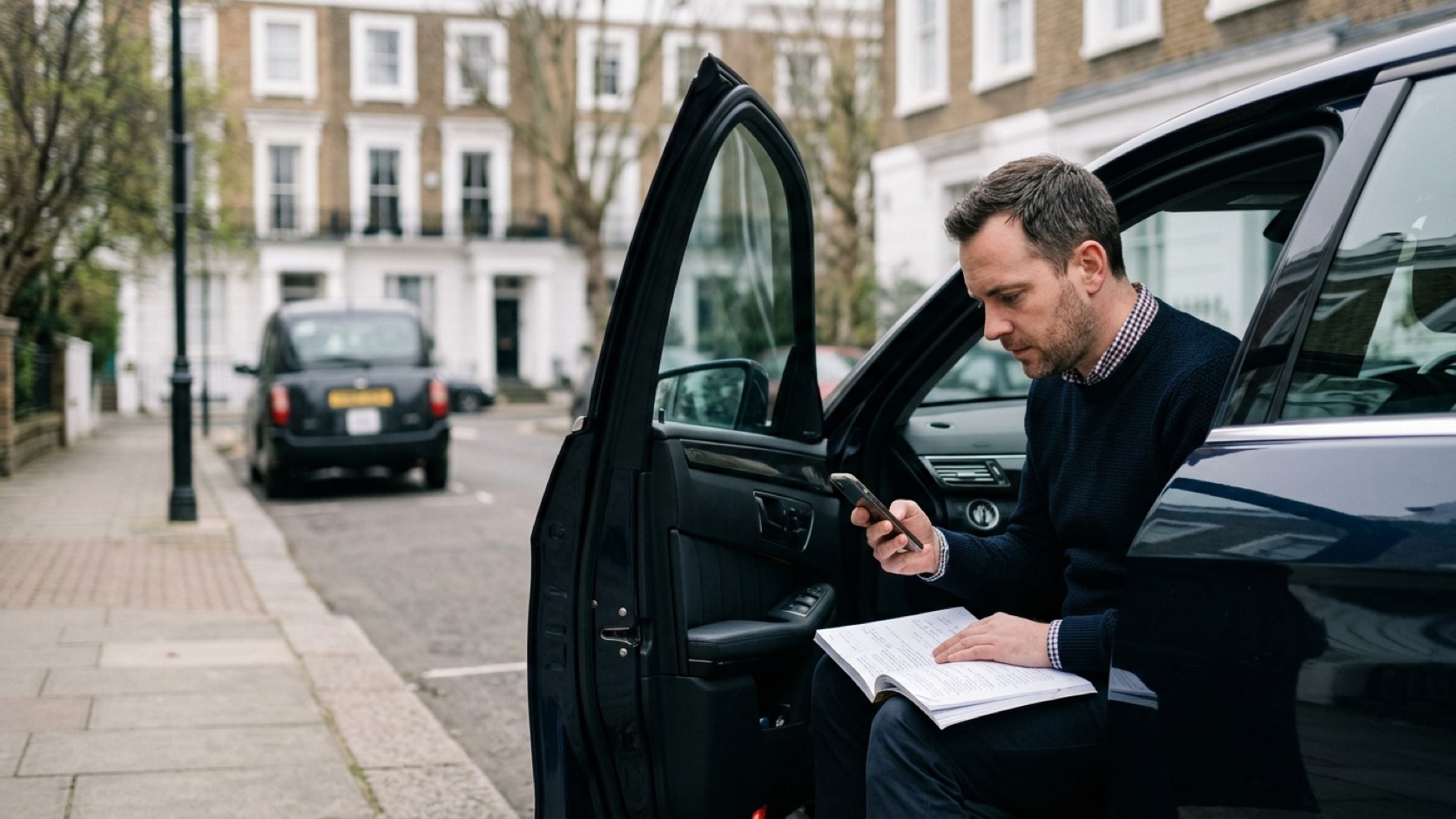
SERU study notes
Staying Safe (PHV)
Protecting yourself, spotting the warning signs of aggression, calming a difficult situation, hate crime, CCTV in the vehicle and what to do after an assault.
What this topic covers
Protecting yourself, spotting the warning signs of aggression, calming a difficult situation, hate crime, CCTV in the vehicle and what to do after an assault. The full SERU Revision: PHV & Taxi app contains 35 questions on this topic, each referenced to its section of the TfL handbook.
Worked examples
Here are a few practice questions from this topic. Try answering each before reading the explanation.
During a journey, a passenger starts shouting and swearing at you. What are you entitled to do first?
- A. Tell them you will not accept that behaviour ✓ correct
- B. Stay quiet and accept it until the trip ends
- C. Add an extra charge to their fare for the abuse
- D. Drive them straight to the nearest police station
Your booking is for Priya, going to Camden. At the pick-up point, a man walks up to your car, which is still locked, and asks if it is for him. What should you do before he gets in?
- A. Ask his name and destination and check them against the booking ✓ correct
- B. Let him in, then check the booking once you are moving
- C. Take him anyway, because the operator can fix a mix-up
- D. Ask him to pay the fare in cash before you unlock the doors
Sitting with ____ is one of the signs that a person might become aggressive.
- A. crossed arms ✓ correct
- B. closed eyes
- C. a seat belt on
- D. headphones in
You arrive for a booking. The passenger has been drinking, cannot tell you clearly where they are going and cannot walk without help. What may you do?
- A. Refuse to take them, as you cannot be sure of the address ✓ correct
- B. Take them, because an accepted booking must be completed
- C. Take them and guess the address from their belongings
- D. Drive them to the nearest police station to sober up
Ready to test yourself?
Take the interactive quiz for Staying Safe (PHV).
Start Staying Safe (PHV) quiz →More SERU study notes
Get all 35 questions on this topic in the SERU Revision: PHV & Taxi app.

