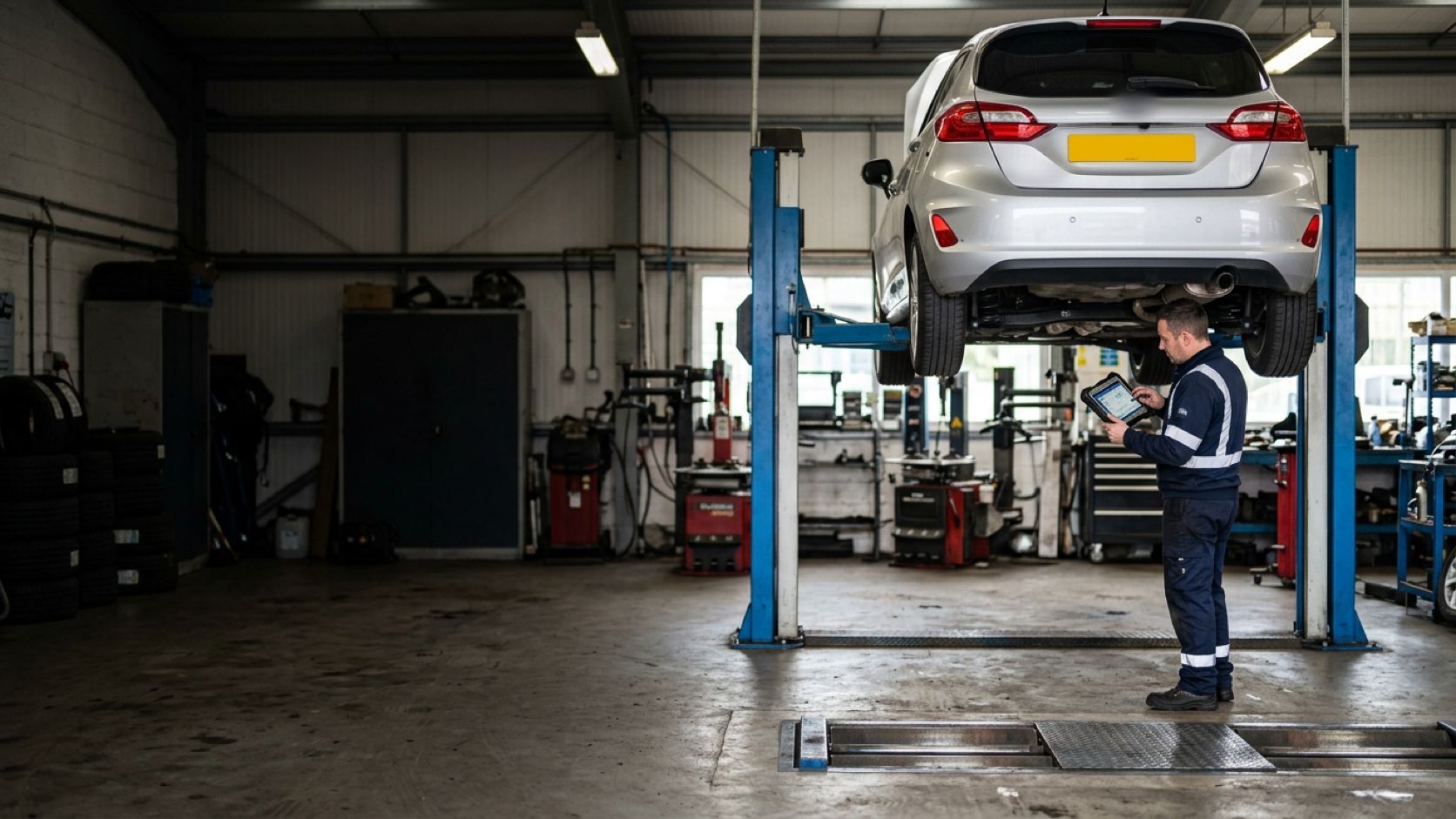
MOT tester with a tablet inspecting the underside of a car raised on a vehicle lift

MOT Tester study notes

Braking Requirements (Group B)

Brake condition and performance, efficiency requirements, pads and discs, and the defects each finding carries.

What this topic covers

Brake condition and performance, efficiency requirements, pads and discs, and the defects each finding carries. The full MOT Tester Annual Assessment app contains 45 questions on this topic, each referenced to its section of the DVSA manual.

Worked examples

Here are a few practice questions from this topic. Try answering each before reading the explanation.

Example 1

A car is presented with the anti-slip rubber missing from the service brake pedal. The pedal itself is sound and the brakes work normally. What is your action?

  • A. Major ✓ correct
  • B. Minor
  • C. Pass
  • D. Dangerous
Explanation: Anti-slip provision missing, loose or worn smooth is a Major defect in its own right, regardless of how the brakes perform. Minor is the wrong category because the manual assigns Minor only to a control that fails to release correctly. Passing it ignores a listed defect. Dangerous is reserved for faults leaving the vehicle unsafe to drive, which a missing pedal rubber alone is not. (Section 1.1.2, defect (c))
Example 2

An audible air leak is found in the braking system of a Class 7 vehicle. Pressure build-up time is within the requirement. What is your action?

  • A. Major ✓ correct
  • B. Minor
  • C. Pass
  • D. Dangerous
Explanation: An audible air leak, or one causing a noticeable pressure drop, is a Major defect and is assessed independently of build-up time. Minor is not the listed category for a leak of this kind. Passing on the basis of acceptable build-up time misreads the requirement, since the two defects are separate. Dangerous is not assigned to this defect in the manual. (Section 1.1.3, defect (d))
Example 3

A pressure storage reservoir on an air brake system shows light surface corrosion with no leak and no significant material loss. What is your action?

  • A. Minor ✓ correct
  • B. Major
  • C. Dangerous
  • D. Pass
Explanation: Minor damage or corrosion to a reservoir is a Minor defect. It becomes Major once the reservoir is heavily damaged, heavily corroded or leaking, none of which applies to light surface corrosion. Dangerous is not listed for a reservoir at this section. Passing would leave a recordable defect off the certificate. (Section 1.1.9, defects (a)(i) and (a)(ii))
Example 4

A leaking brake pipe connection is found on a hydraulic braking system. What is your action?

  • A. Dangerous ✓ correct
  • B. Major
  • C. Minor
  • D. Pass
Explanation: On a hydraulic system a leaking pipe or connection is Dangerous, because fluid loss removes braking directly. The same defect on an air brake system is Major, which is the distinction being tested here. Minor at this section covers inadequate clipping or support. Passing is not available for a listed defect. (Section 1.1.11, defects (b)(i) and (b)(ii))

Ready to test yourself?

Take the interactive quiz for Braking Requirements (Group B).

Start Braking Requirements (Group B) quiz →

Get all 45 questions on this topic in the MOT Tester Annual Assessment app.

Download on the App StoreGet it on Google Play
