
Traffic Signs study notes
Signs Practice
A sample of the 156 DVSA theory test questions on signs, signals and road markings.
What this topic covers
A sample of the 156 DVSA theory test questions on signs, signals and road markings. The full UK Road & Traffic Signs app contains 156 questions on this topic.
In the app's syllabus: Road signs, Speed limits, Road markings, Regulations.
Worked examples
Here are a few practice questions from this topic. Try answering each before reading the explanation.
Example 1
You MUST obey signs giving orders. These signs are mostly in
- A. green rectangles
- B. red triangles
- C. blue rectangles
- D. red circles ✓ correct
Explanation: There are three basic types of traffic sign, those that warn, inform or give orders. Generally, triangular signs warn, rectangular ones give information or directions, and circular signs usually give orders. An exception is the eight-sided 'STOP' sign.
Example 2
What does this sign mean?
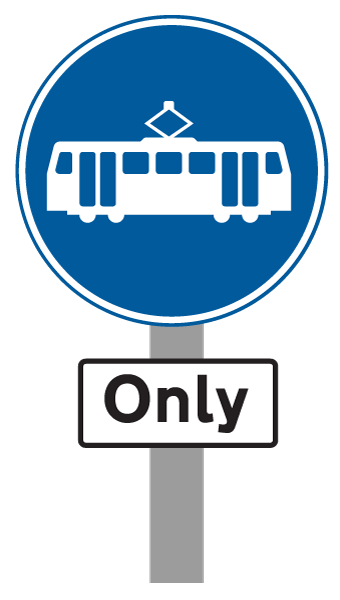
- A. Route for trams ✓ correct
- B. Give way to trams
- C. Route for buses
- D. Give way to buses
Explanation: Take extra care when you encounter trams. Look out for road markings and signs that alert you to them. Modern trams are very quiet and you may not hear them approaching.
Example 3
What does this sign mean?
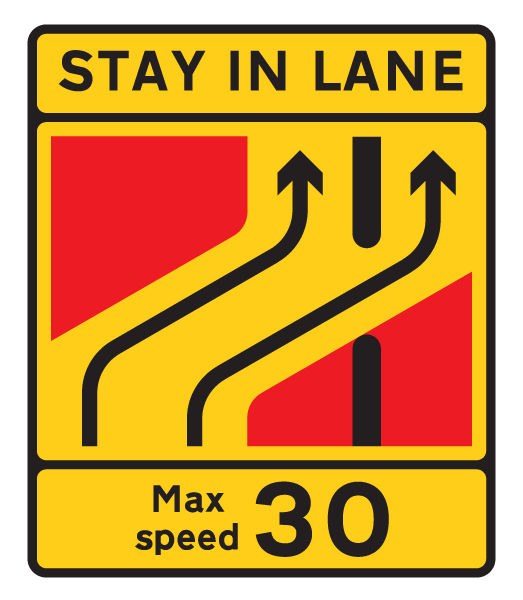
- A. Change to the left lane
- B. Leave at the next exit
- C. Contraflow system ✓ correct
- D. One-way street
Explanation: If you use the right-hand lane in a contraflow system, you'll be travelling with no permanent barrier between you and the oncoming traffic. Observe speed limits and keep a good distance from the vehicle ahead.
Example 4
What is the maximum speed on a single carriageway road?
- A. 50 mph
- B. 60 mph ✓ correct
- C. 40 mph
- D. 70 mph
Explanation: If you're travelling on a dual carriageway that becomes a single carriageway road, reduce your speed gradually so that you aren't exceeding the limit as you enter. There might not be a sign to remind you of the limit, so make sure you know what the speed limits are for different types of roads and vehicles.
Get all 156 questions on this topic in the UK Road & Traffic Signs app.

