
Every so often a theory question makes you stop and think — the kind where even a sensible guess feels risky. The Think Driving School video 25 of the Hardest Theory Questions gathers exactly those: sign shapes and colours, tunnel procedures, and the precise figures the DVSA loves to test. We’ve taken all 25, sorted them into themes, and explained the answers so they actually stick.
If you can answer these confidently, you’re in great shape for the real thing. Let’s work through them.
Sign shapes and colours
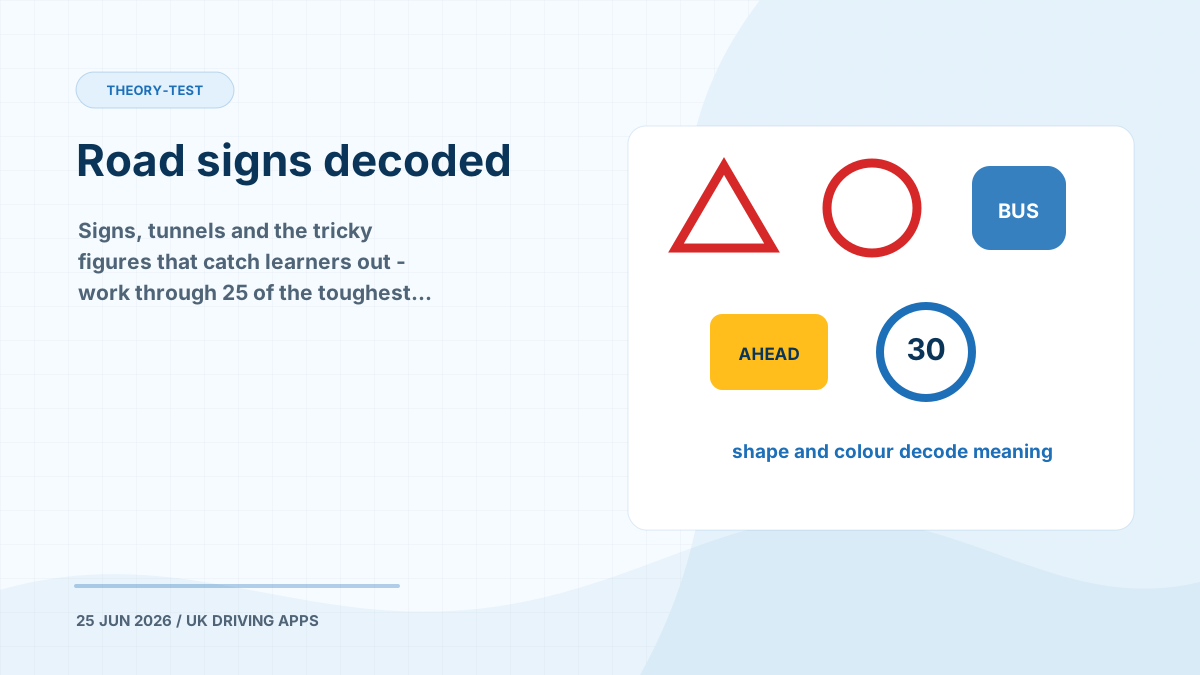
The single biggest source of marks on the theory test is signs — and the clever part is that the shape and colour tell you what a sign does before you’ve even read it. Learn the system once and you can decode signs you’ve never seen.
| Shape / colour | What it tells you |
|---|---|
| Triangle | Warns you of a hazard ahead |
| Circle | Orders you (red ring = prohibition, blue = mandatory) |
| Rectangle | Informs you |
| Diamond | Signals for trams (and tram drivers) |
| Brown rectangle | Tourist and leisure information |
| Blue rectangle | Information signs — including on motorways |
| Yellow rectangle | Temporary information, such as diversions and roadworks |
Did you know? Trams get their own diamond-shaped signs precisely so other drivers don’t confuse them with rules meant for us. Different shapes mean you instantly know which signs apply to your vehicle.
A few specific signs from the video are worth committing to memory:
- The red cross on a blue background = a clearway. It means no stopping on the main carriageway at any time — not even to pick up or set down passengers. It marks a 24-hour clearway.
- The give way sign is the only upside-down (inverted) triangle. Nothing else uses that shape, so it’s unmistakable.
- STOP and GIVE WAY have unique shapes (octagon and inverted triangle) on purpose — so you can still recognise them by outline alone if they’re caked in snow or dirt.
- The national speed limit sign (a white circle with a single black diagonal) means 60mph for a car on a single carriageway and 70mph on a dual carriageway.
If signs are your weak spot, it’s worth spending real time here. Our deeper guides — UK Road Signs Explained: Shapes, Colours and What They Mean and 60 UK Road Signs You Must Know for the Theory Test — break the whole system down with examples.
Tunnels — the questions learners rarely revise
Tunnels barely feature in everyday driving, so most learners skip past them. That’s exactly why they catch people out.
Before you enter a tunnel, switch on two things:
- Your dipped headlights — even in a well-lit tunnel, so you’re easier to see.
- Your radio — tunnel control teams can broadcast safety messages on local frequencies. Many tunnels display a sign telling you which station to tune into.
You should also remove your sunglasses before entering, so your eyes adjust quickly to the change in light.
Tip: If you break down inside a tunnel, the order of actions matters. Switch on your hazard lights, drive out if you safely can, and never attempt a U-turn or reverse. If you can’t drive clear, pull into a lay-by or emergency lane (or as far left as possible), switch off the engine, and walk to an emergency point for help — wearing a reflective jacket and watching for traffic.
The figures even a good guess won’t save you on
This is where the video earns its title. These are exact numbers — and the DVSA expects you to know them, not estimate them.
| Question | Answer |
|---|---|
| Minimum legal tyre tread depth | 1.6mm |
| Use fog lights when visibility falls below | 100 metres |
| Age you become responsible for your own seatbelt | 14 |
| Days to produce documents at a police station | 7 days |
| Stopping distance in the wet | Up to double (×2) |
| Stopping distance on ice or snow | Up to ten times (×10) |
| How often to renew the photo on your licence | Every 10 years |
| Warning triangle distance behind your vehicle | At least 45 metres |
| Max passenger seats on a Category B licence | 8 (plus the driver) |
| Max vehicle weight on a Category B licence | 3,500kg |
A few of these deserve a second look:
- Fog lights must be switched off as soon as visibility improves — leaving them on dazzles and confuses other drivers, and is an offence.
- The driver is responsible for any passenger under 14 being properly restrained, even when the child’s own parents are sitting in the car.
- Stopping distances aren’t just trivia — they underpin a whole cluster of test questions. Memorise the dry figures, then remember the wet (×2) and icy (×10) multipliers.
Remember: A warning triangle goes at least 45 metres behind your vehicle — but you should never use one on a motorway. The hard shoulder is far too dangerous a place to be walking back along.
How to actually lock this in
As the video rightly says, everyone learns differently — some people read the Highway Code cover to cover, others learn best by repeated practice. The key advice is the same either way: whenever you hit a question you don’t fully understand, look it up properly. You need this information for life on the road, not just for 57 minutes in a test centre.
A sensible routine:
- Read the explanation for every question — even the ones you get right. The real test rephrases questions, so understanding why an answer is correct beats memorising the answer itself.
- Drill the figures until they’re automatic. Tread depth, stopping distances, seatbelt age and licence categories come up again and again.
- Don’t neglect hazard perception. It’s a separate scored section that trips up well-prepared learners — our hazard perception guide walks you through scoring it well.
For a complete revision schedule, see our guide to passing the UK theory test first time.
Practise these questions in the app
Reading the answers once isn’t enough — you need to meet questions like these over and over until they feel obvious. That’s exactly what the Driving Theory Test app is built for. It gives you 758 official DVSA questions across all 15 topics, full timed mock tests, and the entire Highway Code in one place — with a detailed explanation behind every single question, so the tricky signs, tunnel rules and figures above become second nature.
Whatever you’re training for, drivingapps.co.uk covers it with a specialist app — over 5,200 questions across 8 apps in total:
| Test type | App |
|---|---|
| Car (Category B) | Driving Theory Test |
| Motorcycle | Motorcycle Theory Test |
| LGV / lorry | LGV Theory Test |
| PCV / bus & coach | PCV Theory Test |
| Driving instructor | ADI / PDI Toolkit |
| Signs reference | UK Traffic Signs |
| MOT tester annual assessment | MOT Tester Annual Assessment |
You can also try free quizzes right here on the site — no sign-up, no download. Work through these 25 a few more times, fill the gaps, and you’ll walk into your test ready. Good luck!
Frequently asked questions
What is the minimum legal tyre tread depth in the UK?
How far back should I place a warning triangle if I break down?
How much does your stopping distance increase in wet and icy conditions?
At what age is a passenger legally responsible for their own seatbelt?
What can I drive on a Category B car licence?
Related apps

Try a free practice quiz
Reading is great. Practising is better. No sign-up required.