
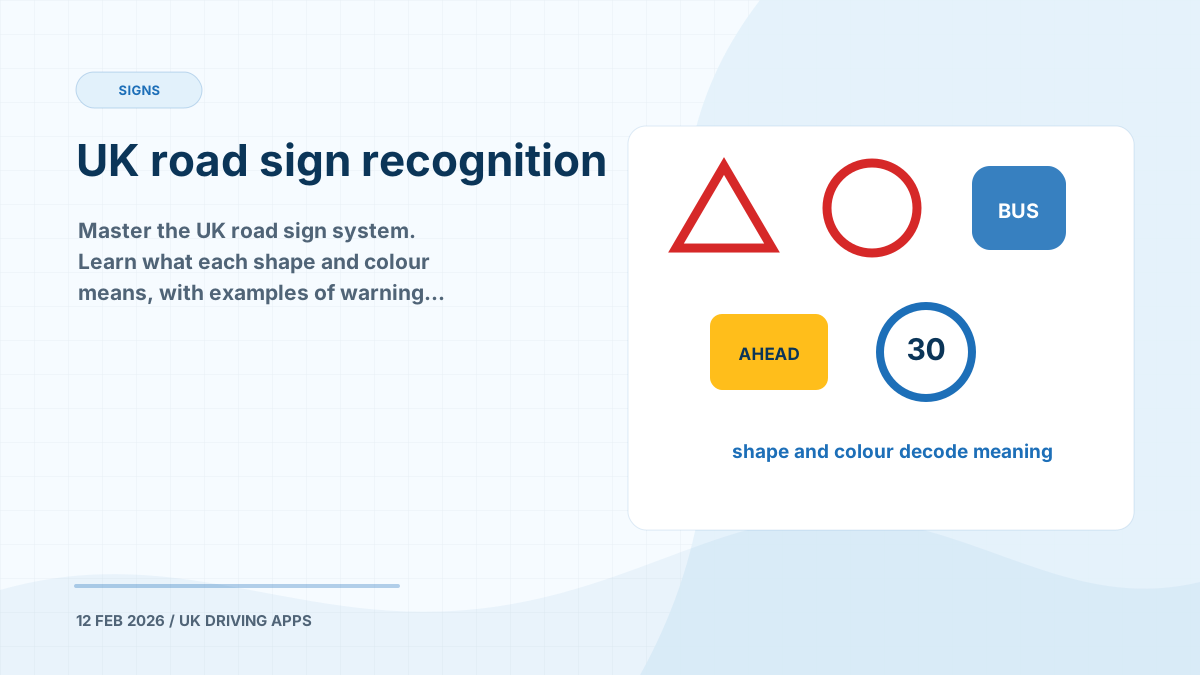
UK road signs follow a strict system: the shape tells you what kind of sign it is, and the colour tells you what it’s about. Once you know the system, you can interpret any sign you’ve never seen before — which is exactly what the DVSA expects you to be able to do.
This guide breaks down every shape and colour category, with examples of the most common signs you’ll see on test day.
The three sign families
| Shape | Purpose | Example |
|---|---|---|
| Circle | Gives orders (must / must not) | Speed limits, no entry, mandatory direction |
| Triangle | Warning of a hazard | Junction ahead, road narrows, school crossing |
| Rectangle | Provides information | Direction signs, parking, lane info |
There’s one famous exception: the STOP sign is an octagon (eight-sided). Its unique shape means you can recognise it even in fog or snow, when the writing isn’t visible.
Tip: When you see a sign on the test, ask yourself two questions before reading the words: (1) what shape is it? and (2) what colour is it? Those two answers narrow it down to one of about a dozen meanings.
Mandatory signs (blue circles)
A solid blue circle with a white symbol gives you an order you must follow. Common examples:
- Mini-roundabout (rotating arrows) — give way to traffic from the right
- Keep left / Keep right (white arrow) — pass the obstruction on the indicated side
- Cycle route — separated lane for cycles
- Turn left ahead — you must turn left at the junction ahead
Prohibition signs (red circles)
A red ring or solid red circle tells you what you must not do.
- No entry (red circle with white horizontal bar) — no vehicles may enter
- No motor vehicles — pedal cycles and pedestrians only
- Maximum speed limit (number in red ring) — must not exceed this speed
- No overtaking — overtaking prohibited until end-of-restriction sign
Did you know? A red triangle warns you of a hazard. A red circle ORDERS you about what to do. Mixing those two up is one of the most common test mistakes.
Warning signs (red triangles)
Triangular signs with a red border warn you of something ahead. The symbol inside tells you what:
- Junction ahead (T-shape) — give way to traffic on the major road
- Road narrows on both sides (arrows pointing inward)
- Slippery road (skidding car)
- Cycle route crosses road (bicycle)
- Children crossing (two children walking)
Direction signs (rectangles)
The colour of a rectangular sign tells you the type of road it’s directing you to:
| Colour | Means |
|---|---|
| Green | Primary route (formerly trunk road) |
| Blue | Motorway |
| White | Non-primary route (local destinations) |
| Brown | Tourist attraction |
| Yellow temporary | Diversion route |
Common test-day mix-ups
After thousands of test debriefs, these are the signs learners most often confuse:
- No entry vs no through road. No entry is a red circle with white bar. No through road is a rectangle with a red T-shape on white — it means the road is a dead end.
- Bridge height (imperial vs metric). UK bridges show height in feet AND metres. Make sure you read the right one for your vehicle’s documentation.
- Quayside or river bank. This warning sign (a car driving into water) means the road ends at water — don’t keep driving.
Practise with a free quiz
Knowing the rules is one thing; recognising the signs under time pressure is another. Try a free traffic signs practice quiz and see how many you can get in 5 minutes — it’s the best way to find your weak spots.
You can also browse all 980+ signs in our UK Traffic Signs app, grouped by category with diagrams and descriptions.
Frequently asked questions
How many UK road signs are there?
What shape are warning signs in the UK?
What does a red circle mean on a UK road sign?
Related apps
Try a free practice quiz
Reading is great. Practising is better. No sign-up required.