PCV study notes
Traffic Signs
Signs that matter most to large vehicles — weight, height and width limits, and route signs.
What this topic covers
Signs that matter most to large vehicles — weight, height and width limits, and route signs. The full PCV Theory Test & Toolkit app contains 71 questions on this topic.
In the app's syllabus: Road signs, Speed limits, Regulations.
Worked examples
Here are a few practice questions from this topic. Try answering each before reading the explanation.
What should you do if you see this sign when you're about to overtake?

- A. Hold back until you can see clearly ahead ✓ correct
- B. Switch your headlights on before overtaking
- C. Move to the right to get a better view
- D. Overtake the other driver as quickly as possible
The double white line along the centre of the road is unbroken on your side. When may you cross the line?

- A. To overtake a driver travelling at 20 mph or less
- B. To check it's safe to overtake the vehicle in front
- C. To overtake a cyclist travelling at 10 mph or less ✓ correct
- D. To overtake any maintenance vehicle in front
You're on a motorway. What does it mean when a mandatory speed limit is displayed above the hard shoulder?

- A. Large vehicles must use the hard shoulder
- B. You can park on the hard shoulder if you feel tired
- C. The hard shoulder can be used as a running lane ✓ correct
- D. You should not use the hard shoulder as a running lane
What does this sign mean?
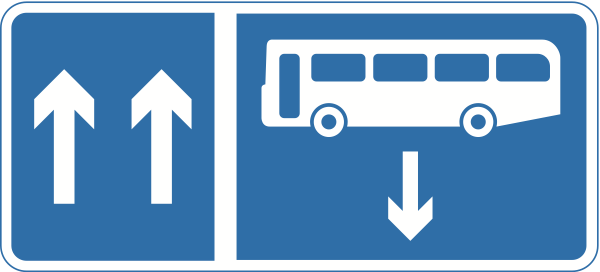
- A. Give way to buses
- B. With-flow bus lane
- C. Contraflow bus lane ✓ correct
- D. Bus station on the right
More PCV study notes
Get all 71 questions on this topic in the PCV Theory Test & Toolkit app.

