
PCV study notes
The Road
Road types, weather, lane discipline, junctions and traffic calming for big vehicles.
What this topic covers
Road types, weather, lane discipline, junctions and traffic calming for big vehicles. The full PCV Theory Test & Toolkit app contains 114 questions on this topic.
In the app's syllabus: Anticipation, Hazard awareness, Attention, Speed and distance, Reaction time, Risk factors.
Worked examples
Here are a few practice questions from this topic. Try answering each before reading the explanation.
What problem may you have when driving at night?
- A. It takes longer to stop
- B. You'll have reduced visibility ✓ correct
- C. There'll be an increase in traffic
- D. It's more difficult to keep to speed limits
High-sided vehicles can be affected by side wind. On which type of road is this most likely?
- A. Motorway underpasses
- B. Slip roads
- C. Open roads ✓ correct
- D. Narrow country lanes
Why are brushes fitted to this vehicle's wheel arch?
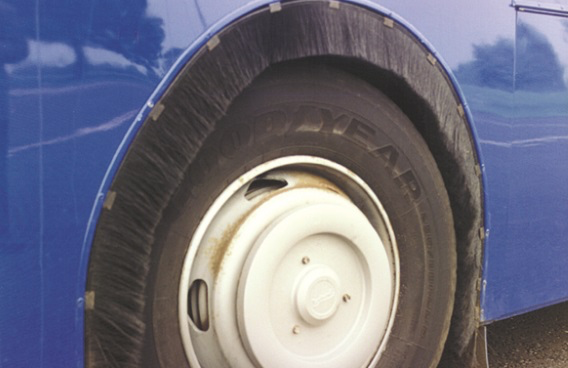
- A. To reduce spray on wet roads ✓ correct
- B. To stop snow building up behind the wheel
- C. To remove objects from the tyre tread
- D. To clear mud from the tyres on building sites
How much longer can your stopping distance be in snow than in dry weather?
- A. 10 times as long ✓ correct
- B. 5 times as long
- C. 4 times as long
- D. Twice as long
More PCV study notes
Get all 114 questions on this topic in the PCV Theory Test & Toolkit app.